MENU
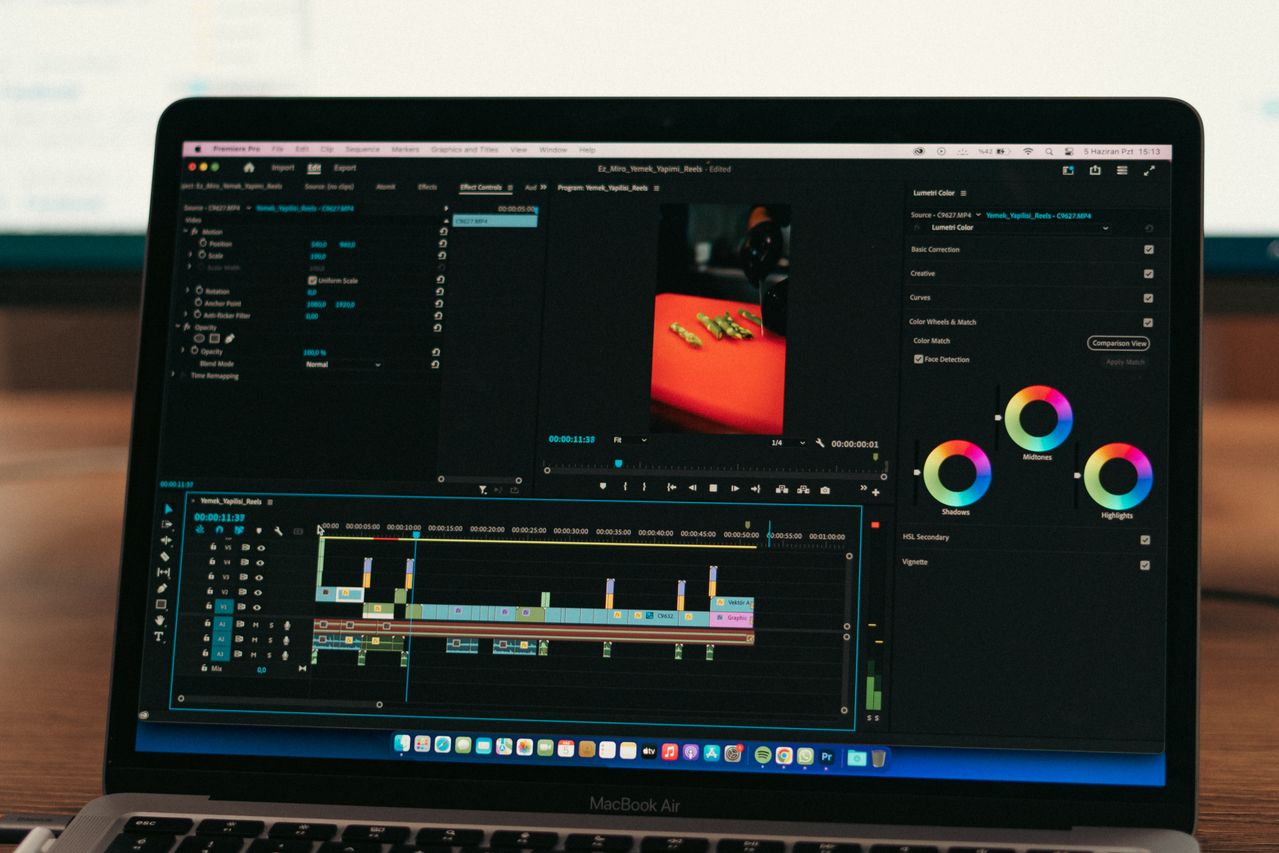

AI video generation has moved beyond short experimental clips into workflows for advertising, product content, training, localization, entertainment, and developer applications. The CVPR 2025 Video-Bench evaluation reflects how video models are increasingly assessed across multiple dimensions rather than on visual quality alone. For platform builders, that variability creates a commercial challenge because model choice, duration, resolution, batch size, and post-processing can all affect the cost of fulfilling a request.
Monetization also needs to account for how generated content is delivered and governed. The European Commission's current AI transparency guidance confirms that Article 50 transparency obligations began applying on August 2, 2026, including machine-readable marking requirements for certain AI-generated or manipulated content. AI video platforms therefore need pricing that reflects workload economics while keeping access, usage, settlement, rights, and content-transparency requirements clearly defined.
AI video generation can represent several different products.
A consumer application may sell recurring access to a creative interface. A developer platform may sell generation through an API. An enterprise product may package generation, localization, editing, and asset management into a larger workflow.
Each requires a clear billable unit.
Possible units include:
The customer-facing unit does not need to mirror every internal cost.
A ten-second clip may involve inference, content checks, several generation stages, audio processing, storage, and upscaling. The platform can meter those components internally while presenting a simpler commercial unit such as credits or generated seconds.
The objective is to make pricing understandable without losing the cost detail needed to manage margins.
Video generation can fail after a request has already consumed infrastructure.
Billing policies should therefore define how the platform handles:
A service that requests four video variants but successfully produces only two needs a predictable billing rule.
One approach is to verify commercial access before execution and settle after successful processing. The current Nevermined credit flow explicitly separates permission verification from settlement after the protected operation succeeds.
Video platforms often serve customers with very different consumption patterns.
An occasional creator, a marketing team producing weekly campaigns, a developer making API calls, and an autonomous agent may all use the same underlying models differently.
That makes a single pricing structure difficult to apply across every use case.
Subscriptions work well when customers use the service regularly and value predictable access.
Plans can vary according to:
Subscriptions do not need to imply unlimited generation.
A recurring plan can provide an access period plus a defined allowance, giving customers predictable spending while limiting the provider's exposure to unusually heavy workloads.
Credits are useful when different operations have different costs.
A platform might assign separate credit amounts to:
Customers work from one balance, while the platform can price each operation according to its economics.
Credits also avoid requiring a separate external payment transaction for every short generation request.
Developer-facing APIs can charge according to measurable consumption.
Possible units include:
Duration can be intuitive for customers, but it should not automatically be treated as a perfect proxy for cost.
A short high-resolution generation using a more expensive model may cost more to fulfill than a longer lightweight clip. Internal metering should therefore remain more detailed than the advertised billing unit.
Variable workloads may require different charges for different requests.
The provider can calculate pricing from factors such as:
Current payment model types support credits-based, time-based, dynamic, and hybrid approaches. Dynamic plans can vary the charge according to request complexity or custom application metrics.
Hybrid structures can combine:
The goal is to keep the commercial model understandable while avoiding one flat price for workloads with materially different fulfillment costs.
Video-generation cost is rarely determined by output count alone.
Relevant cost drivers can include:
Two ten-second clips can therefore have different economics.
Useful metrics include:
Observability can also capture custom properties such as duration, model, resolution, or job type.
A user-facing video editor is only one distribution channel.
Video APIs can power:
A paid API needs more than authentication.
The commercial layer should specify:
A lightweight animation endpoint can use fixed credits while a longer generation workflow uses dynamic charges. Different services can therefore share the same commercial infrastructure without sharing the same price.
An AI video platform and the creators using it have different monetization models.
The platform earns by selling access to generation, editing, APIs, assets, or workflows. A creator may later earn from advertising, subscriptions, sponsorships, product sales, licensing, or client work.
Those downstream earnings should not be presented as guaranteed results of using an AI video generator.
YouTube does not treat AI use alone as an automatic barrier to monetization.
Its current policies require monetized content to be original and authentic rather than mass-produced or repetitive. The policy specifically identifies generic or unoriginal AI-generated templates that appear mass-produced as content that can be ineligible for monetization.
YouTube also requires disclosure for certain realistic AI-generated or meaningfully altered content, while stating that the required AI disclosure does not by itself affect monetization eligibility.
For video-generation platforms serving creators, the practical point is simple: generation capacity and downstream monetization are separate. Producing more clips does not guarantee that a distribution platform will monetize them.
Paying to generate a video does not resolve every question about how that output can be used.
Platforms should distinguish among:
The payment plan determines what the customer purchased from the platform. It should not be used as shorthand for every copyright, licensing, or content-policy question.
Transparency requirements can also affect the product itself.
The European Commission states that Article 50 obligations require relevant AI providers to support machine-readable marking of AI-generated or manipulated content. Deployers also have disclosure duties for deepfakes and certain AI-generated content in specified contexts.
Depending on the product and jurisdiction, video platforms may therefore need capabilities such as:
These requirements should remain separate from pricing, but they can influence what professional and enterprise plans need to include.
Not every video product needs to be delivered through a generation endpoint.
Platforms may also sell:
A platform can monetize static assets separately from live generation by applying subscription or credit-based access to files, datasets, models, APIs, and other protected resources.
This keeps asset monetization distinct from compute-intensive generation while allowing both products to use the same broader commercial architecture.
Video generation can also become one paid operation inside an autonomous workflow.
An agent might need to generate:
An agent-ready service needs to make several commercial facts machine-readable:
A payment and entitlement layer can validate the caller before the protected workload runs. Nevermined's current core architecture validates, meters, and settles inbound requests against an attached payment plan.
This allows video generation to become a paid component inside a larger automated process without requiring a human checkout for every individual clip.
Decide whether customers are buying generated clips, platform access, API calls, digital assets, or completed workflows.
Identify which variables materially affect fulfillment cost, including model selection, duration, resolution, audio processing, post-production, storage, and external APIs.
Specify when a request becomes chargeable and how failures, retries, partial batches, and interrupted renders are treated.
Choose subscriptions, credits, usage pricing, dynamic pricing, or a hybrid according to customer behavior and workload variability.
Keep commercial permissions, content policies, disclosure requirements, provenance, and retention separate from payment status.
Associate each paid operation with the customer, plan, measured usage, completion state, and settlement record.
Compare revenue with model, compute, processing, storage, and third-party costs. Pricing should evolve when the economics of the workload change.
Nevermined provides a payment and monetization layer around an AI service rather than replacing the video model, rendering infrastructure, storage, or application.
A video provider can use the platform to connect paid access, payment plans, credit consumption, settlement, and commercial observability to its existing endpoints and protected resources.
Nevermined adds a payment and entitlement layer to monetizable services.
Each inbound request can be checked against the caller's entitlement before the protected code runs, then metered and settled according to the associated payment plan.
For video workloads, the provider still defines what one billable unit represents.
Nevermined's payment model types include credits-based, time-based, dynamic, and hybrid structures.
A video platform could use:
This allows different endpoints or products to use different commercial rules without requiring separate billing systems for each one.
For operations whose cost varies from request to request, variable credit charges can be calculated by application logic before settlement. Nevermined's current examples support variable costs based on request characteristics.
A video platform could apply its own calculation using duration, resolution, model tier, batch size, or processing path.
The provider determines the economics. The payment infrastructure enforces the resulting commercial rule.
Long-running video jobs benefit from separating authorization from final settlement.
Nevermined's documented pattern can settle after successful processing, allowing the application to perform the protected work after validating payment permission and then redeem the appropriate credits when the job succeeds.
This lets the video service use its own completion criteria for failed renders, partial jobs, or other exceptions.
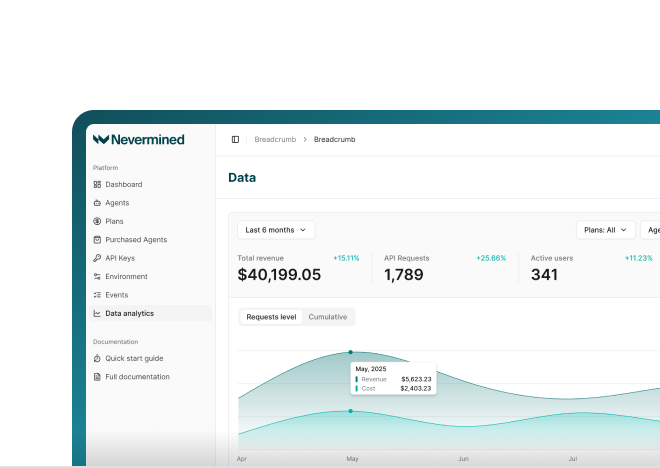
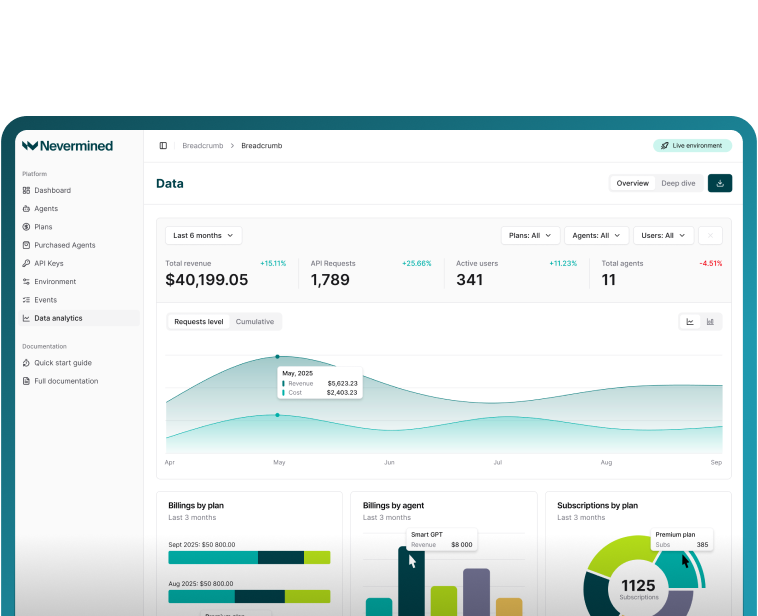
Nevermined's Cost Observability tooling can track incoming requests, credit redemption, plan usage, and revenue.
The broader observability layer also supports custom properties and metadata, allowing a video application to attach information such as model, resolution, workflow, or request type.
Because dedicated video usage helpers are still forthcoming, duration and other video-specific measurements should remain in the application's own usage logic.
A video business may also sell templates, datasets, clips, or model resources.
The monetize static assets workflow can extend paid access beyond live rendering endpoints, allowing related digital resources to use subscription or credit-based access controls.
This creates a consistent commercial layer across generation and downloadable products.
Nevermined's security certifications include ISO/IEC 27001:2022 certification, a SOC 2 Type II attestation report, and PCI SAQ-D controls. The documentation correctly distinguishes SOC 2 Type II as an attestation report rather than a certification.
These controls apply to the payment infrastructure. The video provider remains responsible for its content governance, intellectual-property policies, data handling, synthetic-media requirements, and application security.
The current quickstart documents a working payment integration in five minutes for an agent API, MCP tool, or protected resource, with TypeScript and Python implementation paths.
A video platform can then add its own render logic, usage calculations, completion criteria, and pricing variables around the protected operation.
The appropriate billable unit depends on what the product delivers. Consumer platforms may use subscriptions or credits, while APIs can charge by generated seconds, completed jobs, or another measurable operation. More expensive models, longer clips, higher resolutions, and additional processing may justify different charges when they materially change fulfillment cost. Internal metering should remain detailed enough to measure those differences even when customer-facing pricing is simple.
Subscriptions fit customers who generate content consistently and value predictable access. Credits work well when individual jobs vary because separate operations can consume different amounts from one balance. Hybrid plans can combine a recurring access period with a fixed credit allowance or overage model. Current payment model types support these different structures.
Yes, but AI use alone does not determine monetization eligibility. YouTube requires monetized channels to provide original and authentic content and can reject repetitive, generic, or mass-produced material, including certain AI-generated template content. YouTube also requires disclosure for certain realistic AI-generated or meaningfully altered content. Making the required disclosure does not by itself make a video ineligible for monetization.
The platform should define successful delivery before applying the final charge. A batch may bill only successful outputs, while a failed render may result in no settlement depending on the service policy. A payment flow that can settle after successful processing supports that separation between authorization and final billing. The provider still determines what qualifies as a completed video job.
Yes, when the service exposes programmatic commercial requirements and the agent has valid payment authority. The provider must still define the pricing rule, entitlement, usage unit, and successful completion event. A payment and entitlement layer can validate access before the video workload runs and associate the request with its payment plan. This allows video generation to operate as one paid step inside a larger autonomous workflow.
See Nevermined
in Action
Real-time payments, flexible pricing, and outcome-based monetization—all in one platform.