MENU


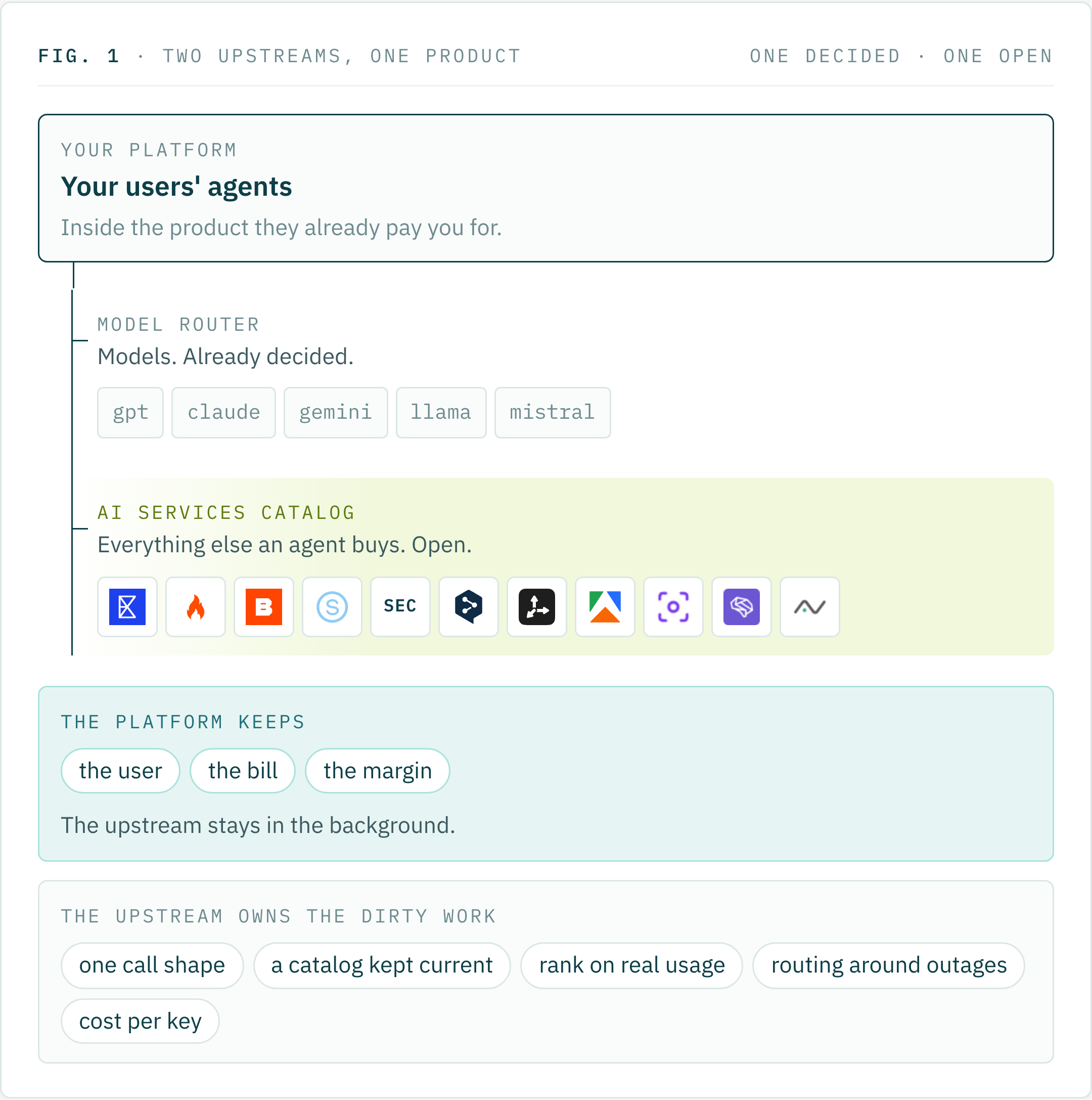
Every serious development platform now routes models through one upstream. Not because it could not call OpenAI directly, but because it did not want to own what came with calling everyone: a different call shape per vendor, a different catalog, a different bill, a different way of failing.
OpenRouter describes itself in one line: “A unified API for every major LLM. One endpoint, hundreds of models, with routing, fallbacks, and cost tracking across providers.” Read that as a list of chores a platform declined to do. Normalise every provider to one call shape. Keep a catalog current as 400 models come and go. Rank them by real-world usage, not by press release. Route around outages. Track cost per key. By its Series B in May 2026 that upstream served 8 million developers, and Stripe has since agreed to buy it.
The pattern repeated at the infrastructure layer. Vercel AI Gateway sells budgets per team, project, key or member on one balance, and in October 2026 widened that balance from text to image, video, speech, embeddings, reranking and web search. Cloudflare's unified billing lets a developer use providers with no provider keys at all. Second-tier gateways such as Portkey and LiteLLM sell the same thing to platform teams: one upstream, per-key budgets, a ledger.
The lesson is not “models are a commodity”. It is that a platform will pay a spread to an upstream that does the dirty work, so long as the upstream stays in the background and the platform keeps the user, the bill and the margin.
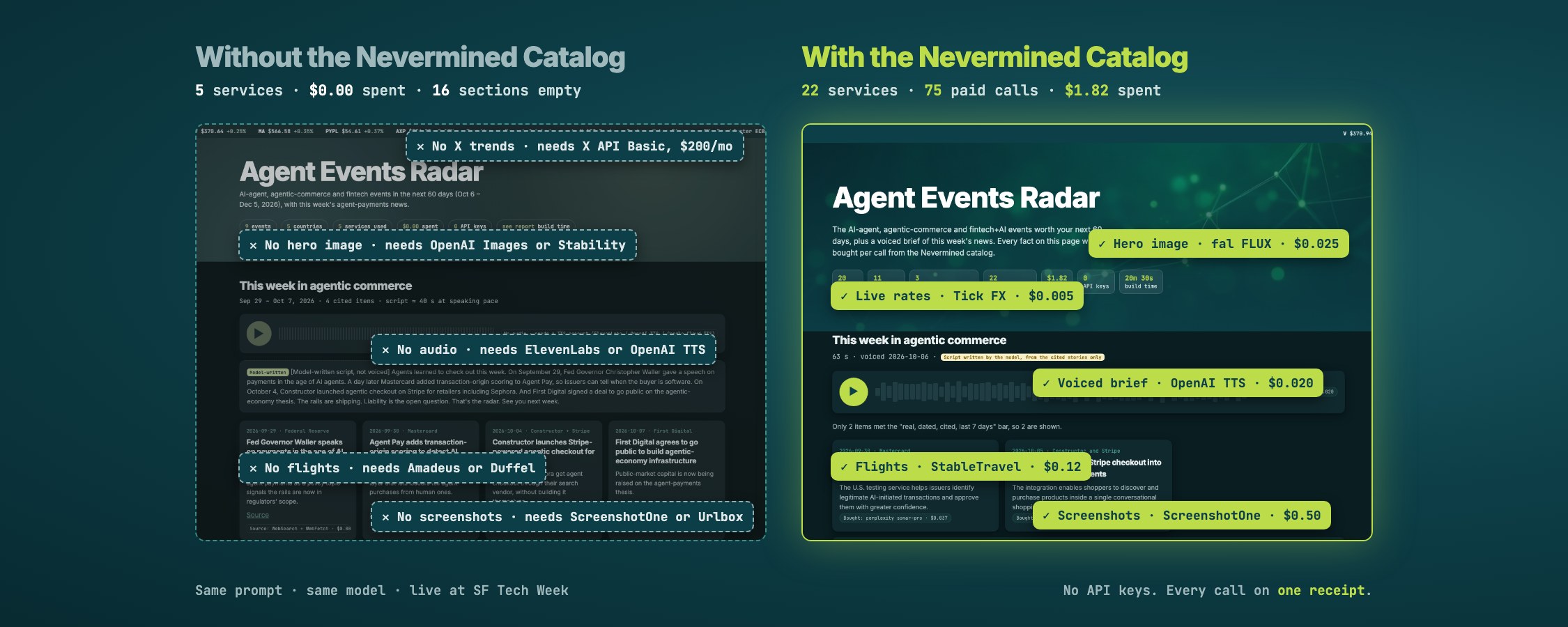
An agent does not stop at models. The moment a job needs a web search, a page scraped, a company enriched, a filing read or a sentence translated, it needs a paid service from a vendor it has never met.
The agent can pay. That part is no longer the obstacle. Visa reported live agent-initiated purchases with independent European merchants in July 2026, with more than 30 issuers behind them; Mastercard's Agent Pay followed with cards an agent can use on its own. On the machine side, pay-per-call protocols such as x402 and MPP let a service quote a price in the HTTP response and settle the call in the same breath. Agent identity is arriving on the same timeline. So “an agent cannot open an account” is yesterday's problem, and we do not build on it.
What is left is harder: knowing what to buy, whether it works right now, what it will cost, and whether the vendor settled what it quoted. Platforms are feeling this one vendor at a time:

Each of these is a platform doing by hand, for one vendor, the thing the model router did for all of them. That is the gap: one upstream for the paid services an agent uses, with the same discipline the model router brought to models.
What does the upstream have to own? More than a list. Here is the work, in the order a platform discovers it.
Every listing needs an endpoint, a price, a request shape and a response shape an agent can act on without reading a landing page. Today the AI Services Catalog holds 160+ listings from 150+ providers across 13 categories, each with a slug, a category, a protocol and a price, in the same words a model router uses, with the same meaning.
An agent asks “find the funding news for every company on my list”, not “call Exa”. Semantic search over the listing text, unioned with full text, serves one ranker behind the endpoint, the app and search, so what the platform shows its users is what Auto picks.
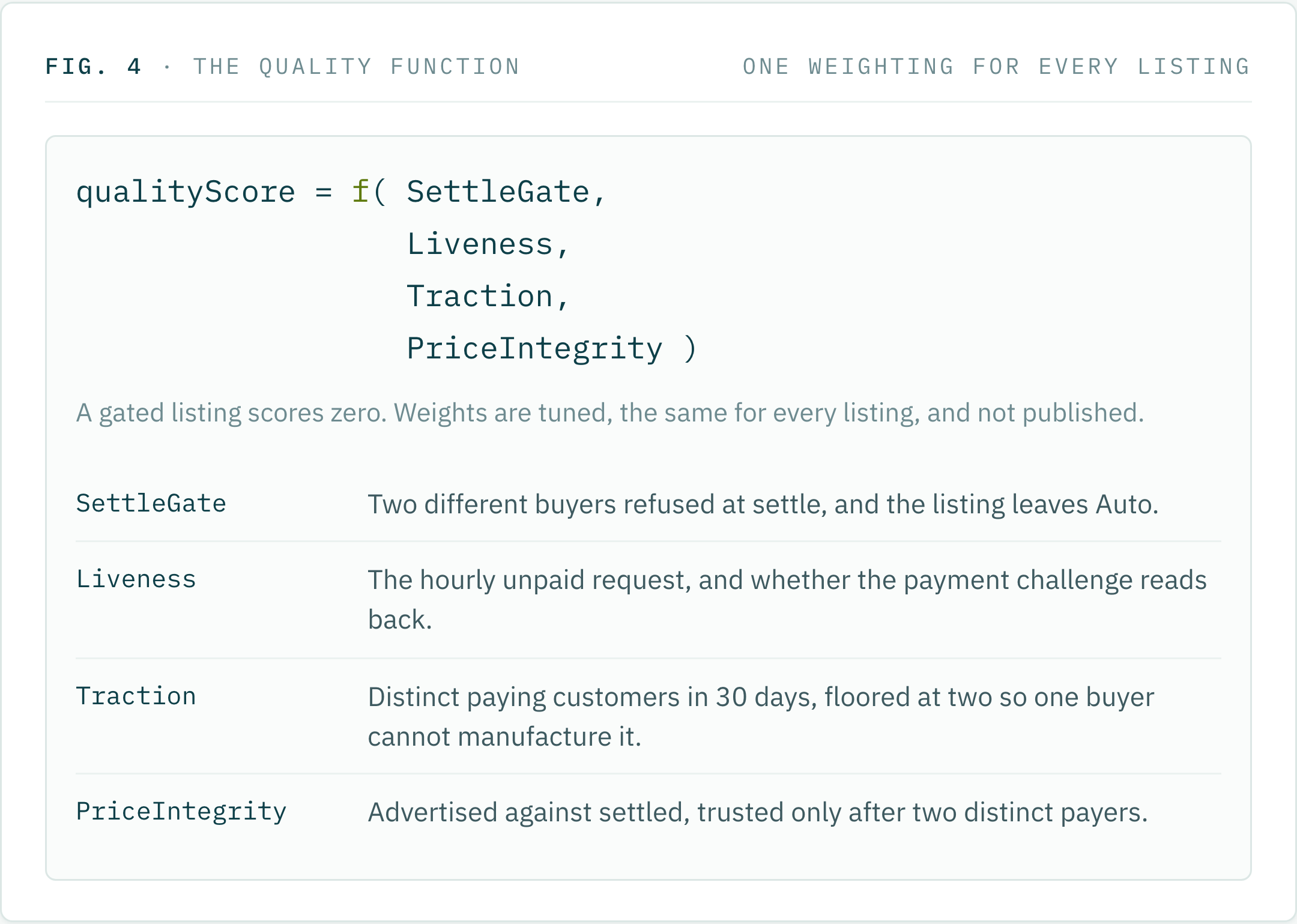
A list says a service exists. A settlement says it works and charges what it said. The shelf is ranked on real settlements: traction counted in distinct paying customers over 30 days (at least two, so no single buyer can fake it), and price integrity measured as advertised against settled. A competitor can copy the list. It cannot copy an observation.
Every listing receives a real unpaid request each hour, and the payment challenge is read back. Two different buyers refused at settle, and the listing leaves Auto. Money is the test.
A budget a human set: cap, per-call limit, expiry, call count. Revoked in one action. The agent cannot raise it. Per user, per agent, or shared across a team.
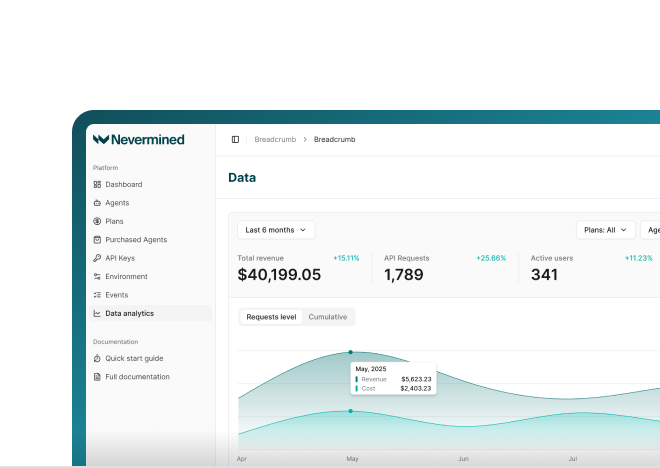
One line per call, exported per caller, so a platform's finance function reconciles agent spend the way it reconciles anything else.
This is where honesty matters. Today Auto returns one pick with its reasons, and the platform chooses the next move from the same shortlist. Automatic fallback to the next listing is the direction, the same way the model router moved from one pick to routing around outages, and it is not shipped.

The score in the middle is one function, the same for every listing.
A platform could build any one of these. Building all of them, and keeping them true as 150 providers change prices and endpoints, is the work it declined to do for models and will decline to do for services.
Four things a platform gets from an upstream that it cannot get from a vendor-by-vendor integration programme.
Supply grows with demand. Service providers list their own services on the same shelf, where Auto finds them like everyone else. A platform that builds its own shelf adds vendors at the speed of its partnerships team; a shared shelf adds them at the speed of the market. Service providers are the one row lit on both sides: they buy what their product needs and sell what they make, on one ledger.
The record of every pick. No model reads the listings. Auto scores the shelf on the sentence and returns one listing with what was considered and why this one won. For a compliance function, “here is why” beats “the agent chose”.

The merchant is paid what it quoted. A published price per call, plus the platform's margin, equals the platform's retail price. Nothing is taken from the seller, which removes the reason to steer a pick.
The evidence compounds. Every settlement improves the rank of the next ask. Signals only the party routing the calls can see, accumulating for every platform on the shelf at once.
The delivery model follows how the platform already charges. The platforms page sets out the four; any mix works.
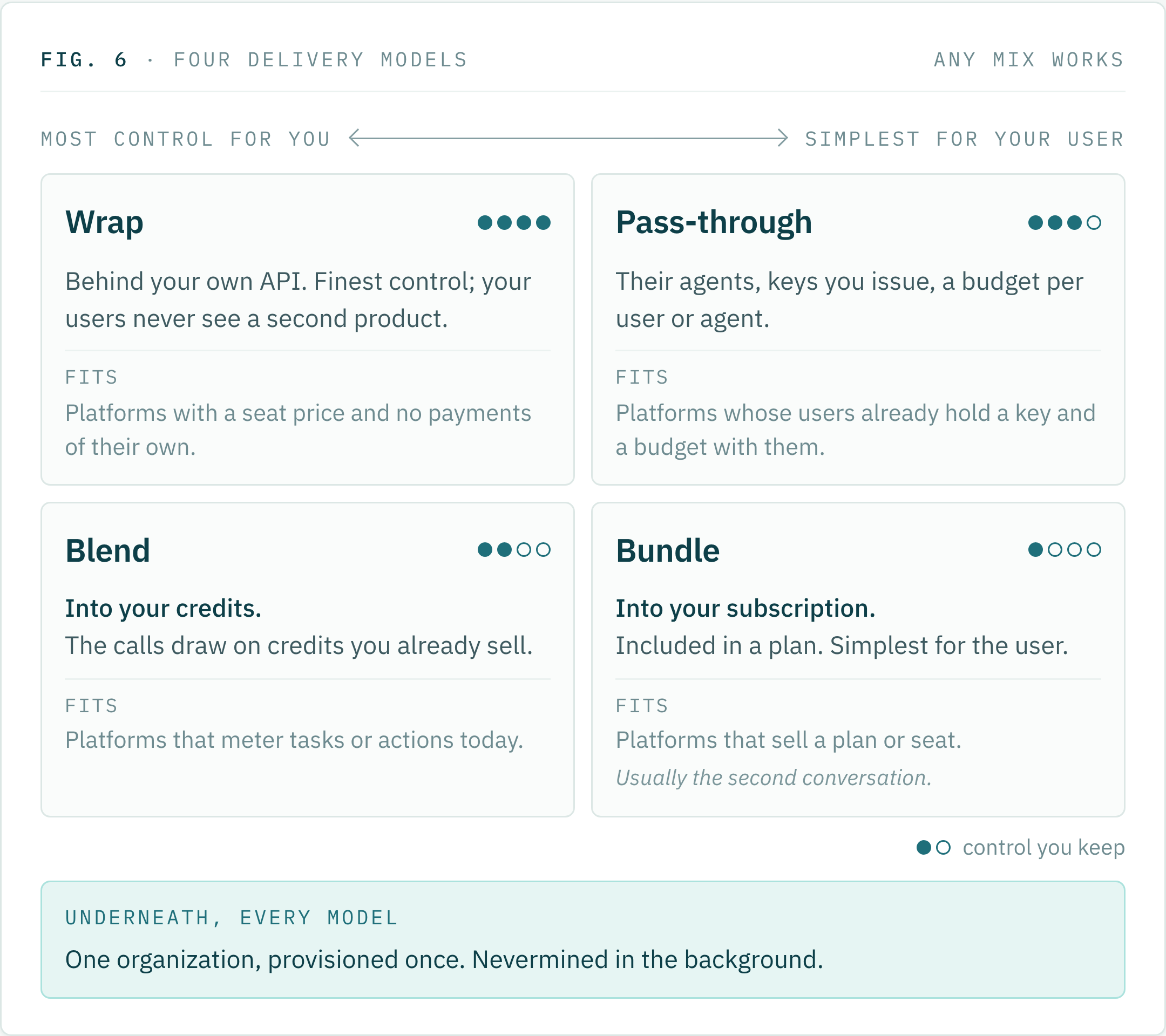
Underneath, the platform is provisioned as one organization, and Nevermined stays in the background in every model: our name appears only where a user signs in through a connector or enrols a card.
The pull is clearest where a platform already sells a unit its users spend.
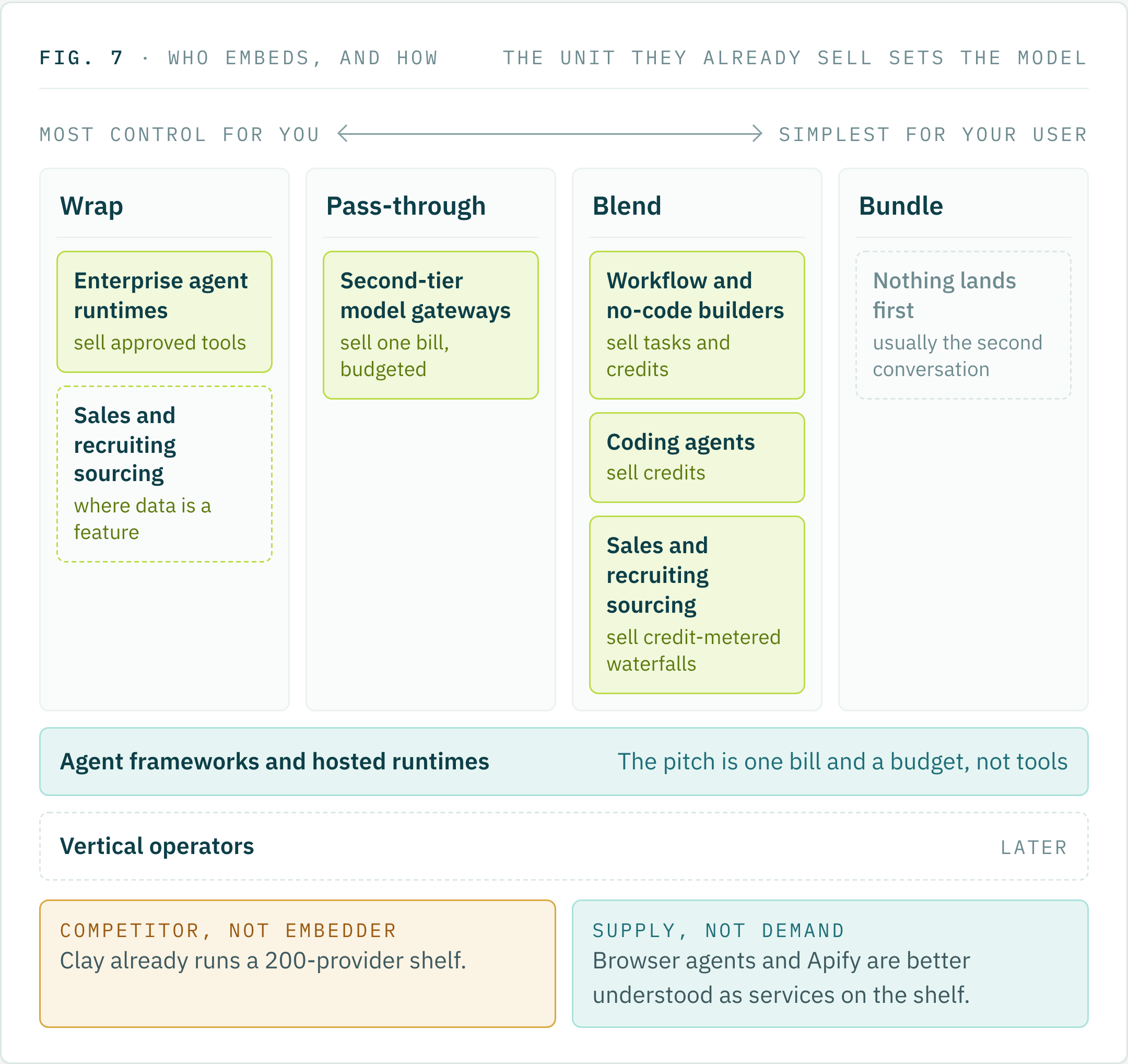
Workflow and no-code agent builders (n8n, Zapier, Make, Gumloop, Relevance AI, Lindy, Dust) already meter tasks and credits, and their docs describe users pasting vendor keys. Blend.
Coding agents and dev environments (Replit, Lovable, Bolt, v0, Devin, Cursor) already sell credits. They have one validated pattern, Replit's, and the rest have the gap. Blend.
Sales and recruiting sourcing agents below Clay (Unify, Instantly, 11x, Artisan, Juicebox, Pin) run waterfalls that are already credit-metered, and sources die (Proxycurl, July 2025). Blend, or wrap where data is presented as a feature. Clay already runs a 200-provider shelf and is the competitor, not the embedder.
Second-tier model gateways (Portkey, LiteLLM, Cloudflare AI Gateway, Helicone, Requesty) hold the one-bill, budgeted buyer relationship already, and the shelf beside their models is bare. OpenRouter's web search through Exa is the first crack. Pass-through on the key the user holds.
Enterprise agent runtimes (AWS Bedrock AgentCore, Microsoft Copilot Studio, Salesforce AgentExchange) have shipped wallets, identity or marketplaces without a vetted shelf. Wrap behind the approved-tools layer, one SKU. Long cycle.
Agent frameworks and hosted runtimes (LangChain / LangSmith Fleet, Mastra, CrewAI, Arcade, Composio) are the largest developer surface. The pitch there is one bill and a budget, not tools.
Vertical operators come later and win the long tail: healthcare admin voice agents that add eligibility checks (Stedi meters them per call), legal research needing a registry no licence covers, equity research needing a long-tail filing. Browser agents and Apify are better understood as supply.
Everyone on this list already made the upstream decision once, for models. The services half is the same decision, and it is open.
The shelf is live at nevermined.app/catalog, the offering is at nevermined.ai/catalog/platforms, and the story for a single developer is at nevermined.ai/catalog. One organization, one endpoint over HTTP or MCP, a budget per user or agent, every call on one ledger.
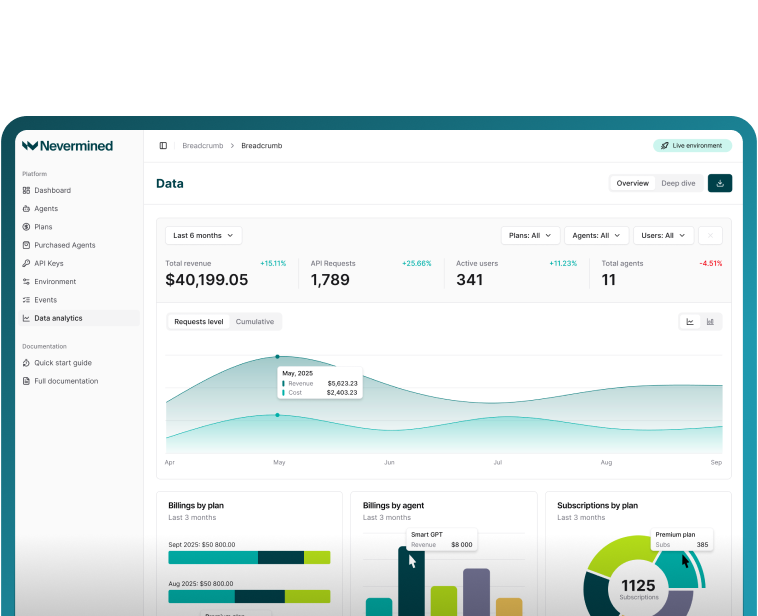
See Nevermined
in Action
Real-time payments, flexible pricing, and outcome-based monetization—all in one platform.