MENU


Data analysis revealing the financial impact of billing errors in AI services and how purpose-built payment infrastructure eliminates revenue leakage
AI service providers face a critical challenge that silently erodes their bottom line: undercharging. With companies losing an estimated 5-10% of ARR to under-billing when relying on manual workflows, the problem has grown too significant to ignore. The complexity of tracking micro-transactions, API calls, and token usage across autonomous AI agents creates countless opportunities for revenue to slip through the cracks. Nevermined's payment infrastructure addresses this challenge with tamper-proof metering, cryptographically signed usage records, and real-time settlement that ensures every AI interaction is accurately captured and billed.
When billing workflows remain manual, businesses hemorrhage an estimated 5-10% of ARR through under-billing. For AI service providers handling thousands of micro-transactions daily, this percentage represents substantial lost revenue that compounds over time.
The financial impact becomes concrete when applied to real revenue figures. A company generating $10 million faces annual revenue leakage of $500,000 to $1,000,000 from billing errors alone. This capital could otherwise fund product development, hiring, or expansion.
Undercharging often appears alongside other billing problems. Research indicates that 61% of late payments are due to invoices that are incorrect or delivered late. These delays create cash flow problems that extend far beyond the initial undercharge.
The market opportunity for solving billing errors has grown substantially, with the billing error detection AI market valued at $1.82 billion in 2024. This figure reflects the urgent demand for solutions that prevent revenue leakage in AI services.
The billing error detection AI market is expected to reach $5.85 billion by 2029, growing at a CAGR of 26.3%. This explosive growth signals widespread recognition that undercharging prevention requires purpose-built infrastructure.
While focused on healthcare, this statistic reveals how pervasive billing errors are across industries. Some estimates suggest up to ~80% of hospital bills contain errors, demonstrating the scale of accuracy challenges in any billing system handling complex transactions.
The shift toward usage-based pricing creates new complexity. In SBI's survey, roughly 58% of SaaS pricing structures include a usage component (pure usage-based plus platform fees with usage included), and the opportunity for undercharging increases dramatically. Every API call, token, and agent interaction must be tracked with precision.
Pricing model instability compounds undercharging risk. OpenView reports that 94% of software companies update pricing or packaging at least annually, and 98% have made updates since September 2022. Each change introduces potential gaps where usage goes unbilled. Nevermined Pay addresses this through a flexible pricing engine that adapts to usage-based, outcome-based, and value-based models without manual reconfiguration.
Traditional billing systems cannot keep pace with modern pricing needs. Legacy billing changes can take months, often cited as roughly six months, to implement each pricing change, creating extended periods where new services may go partially or entirely unbilled.
Human-driven billing processes introduce consistent error rates. Manual invoice processing carries 1-5% error rates that directly translate to undercharging when errors favor the customer.
Billing maintenance consumes valuable technical resources. LedgerUp reports that engineering teams spend 20+ hours per month on billing logic maintenance with legacy systems. This diverts attention from core product development while still leaving gaps that cause undercharging.
HSBC's implementation of AI-powered detection reduced false positives by 60%, demonstrating how machine learning identifies genuine anomalies versus normal variations. The same approach applies to detecting undercharging patterns.
Scale requires automated detection. HSBC monitors approximately 900 million transactions per month using AI systems. For AI service providers handling millions of micro-transactions, similar automated monitoring is essential.
When companies implement AI-first billing platforms, they recover an estimated 3-7% of previously leaked revenue within the first billing cycle. This recovery represents money that was being lost through undetected undercharging.
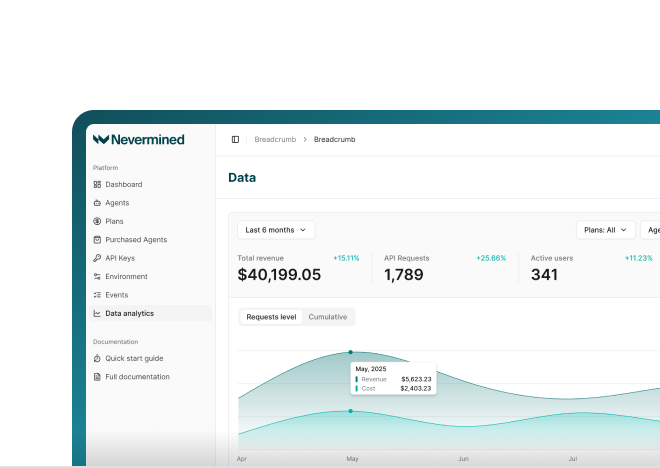
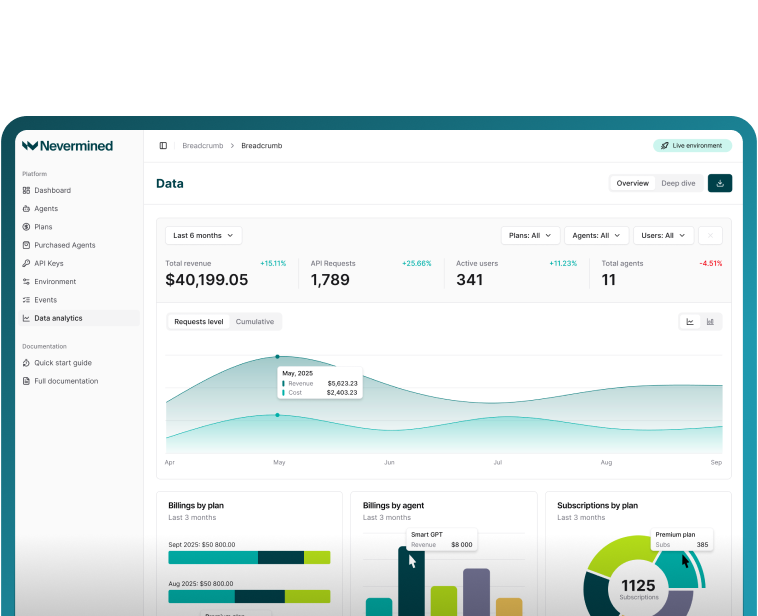
HappyRobot achieved a 12% revenue uplift when implementing modern billing, largely from recovering missed overages. This dramatic improvement shows how much revenue can hide in billing blind spots. Nevermined's observability layer provides real-time visibility into agent performance, user behavior, and revenue analytics that enables detection of underbilling anomalies before they compound into significant losses.
Billing accuracy extends beyond undercharging to fraud prevention. Research shows 79% of organizations were victims of attempted or actual payments fraud activity in 2024. Accurate billing systems provide the audit trail needed to detect and prevent fraud.
Recovery rates have declined sharply. Only 22% of organizations were able to recover 75% or more of funds lost to payments fraud in 2024, down from 41% in 2023. Prevention through accurate billing proves more effective than post-loss recovery.
63% of respondents identify business email compromise as the primary avenue for fraud attempts. This highlights the need for cryptographic verification rather than trust-based billing processes.
Traditional payment methods remain vulnerable. 63% of organizations reported check fraud in 2024, reinforcing the value of modern, verifiable payment infrastructure for AI services.
In healthcare, reported estimates suggest coding errors alone consume 3-5% of practice income. For AI services with similarly complex billing codes and service categories, the same pattern of revenue erosion applies.
Trust in AI billing systems requires robust risk management. The global AI Model Risk Management market was valued at $6.41 billion in 2025, reflecting the importance of verifiable, trustworthy AI operations including billing.
The AI Model Risk Management market is projected to reach $14.55 billion by 2032, growing at a 12.42% CAGR. This trajectory demonstrates increasing investment in systems that ensure AI operations, including billing, remain accurate and auditable.
North America dominates the global AI Model Risk Management market with 38% market share, indicating concentrated investment in billing accuracy and fraud prevention technologies.
Data security directly impacts billing integrity. 269 million card records and 1.9 million stolen US bank checks were posted on dark and clear web platforms in 2024. Tamper-proof metering protects against manipulation of billing records.
Beyond undercharging for delivered services, underpricing strategies create broader financial problems. Underpricing creates CAC imbalances where customer lifetime value may not adequately cover acquisition costs.
When AI solutions compete primarily on price, they accelerate commoditization and reduce focus on differentiation. Dynamic pricing that captures true value prevents this race to the bottom.
Companies using AI-first billing platforms cut DSO by 15-30 days. Faster collection means less time for billing discrepancies to compound.
Legacy systems result in actual DSO far exceeding payment terms, creating substantial cash gaps that allow undercharging to persist undetected while straining cash flow.
By 2023, an estimated 63% of SMB workloads were forecast to be hosted in public clouds, driving demand for AI-driven billing solutions that can track distributed usage across complex infrastructure.
A key indicator of undercharging in AI services is lower revenue despite growth. When agent-to-agent transactions occur without proper metering, this pattern emerges.
The scale of billing errors across industries is staggering. The CFPB found roughly $88 billion in medical debt on credit reports, and the agency notes that medical debt reporting can be inaccurate, with billing complexity and errors contributing to disputes. As AI agent transactions grow, similar scales of error are possible without proper infrastructure.
Implementation speed directly impacts how quickly undercharging can be stopped. Modern billing solutions deploy in estimated 3-5 days compared to roughly six months for legacy enterprise billing platforms. Nevermined gets you from zero to a working payment integration in 5 minutes, with SDKs for both TypeScript and Python.
Valory cut deployment time of their payments and billing infrastructure for the Olas AI agent marketplace from 6 weeks to 6 hours using Nevermined, clawing back $1000s in engineering costs.
Integration follows three steps:
Nevermined Pay delivers bank-grade enterprise-ready metering, compliance, and settlement so every model call turns into auditable revenue. Key capabilities include:
For implementation details and sandbox testing, visit the official documentation.
AI services face undercharging from multiple sources including manual billing workflows with 1-5% error rates, complex usage-based pricing models that are difficult to track accurately, and agent-to-agent transactions that occur without human oversight. The shift to usage-based pricing, with roughly 58% of SaaS pricing structures now including a usage component, has introduced new tracking complexity. Legacy billing systems that can take roughly six months to implement pricing changes create gaps where new services go partially unbilled.
Tamper-proof metering eliminates the opportunity for billing record manipulation or loss by cryptographically signing each usage record at creation and storing it in an append-only log. Companies implementing such systems recover an estimated 3-7% of previously leaked revenue within the first billing cycle. This approach reduces the 1-5% manual error rate to near zero by removing human processing from the metering chain. Independent verification becomes possible because any party can audit that usage totals match billed amounts.
Value-based pricing can prevent undercharging by tying revenue directly to outcomes delivered rather than resources consumed, but it requires robust verification mechanisms to confirm results. Usage-based pricing remains vulnerable when tracking systems miss micro-transactions across the roughly 58% of SaaS companies whose pricing includes a usage component. The most effective approach combines multiple pricing models with automated margin controls that guarantee profitability regardless of which model applies. Nevermined uniquely supports usage-based, outcome-based, and value-based pricing models simultaneously.
Modern billing infrastructure can be implemented in days rather than the roughly six months often required by legacy platforms. Nevermined enables integration in 5 minutes using TypeScript or Python SDKs. Valory reduced their deployment time from 6 weeks to 6 hours when implementing Nevermined for the Olas AI agent marketplace. Companies see an estimated revenue recovery of 3-7% within the first billing cycle after implementation.
Accurate billing creates audit-ready documentation essential for regulatory compliance, particularly given that 79% of organizations experienced payment fraud attempts in 2024. The AI Model Risk Management market reaching $6.41 billion in 2025 reflects regulatory pressure for verifiable AI operations. Tamper-proof metering with cryptographic signatures provides the immutable records needed for compliance verification. GDPR and other data regulations require clear documentation of what was billed and why, making accurate metering a legal necessity.
See Nevermined
in Action
Real-time payments, flexible pricing, and outcome-based monetization—all in one platform.